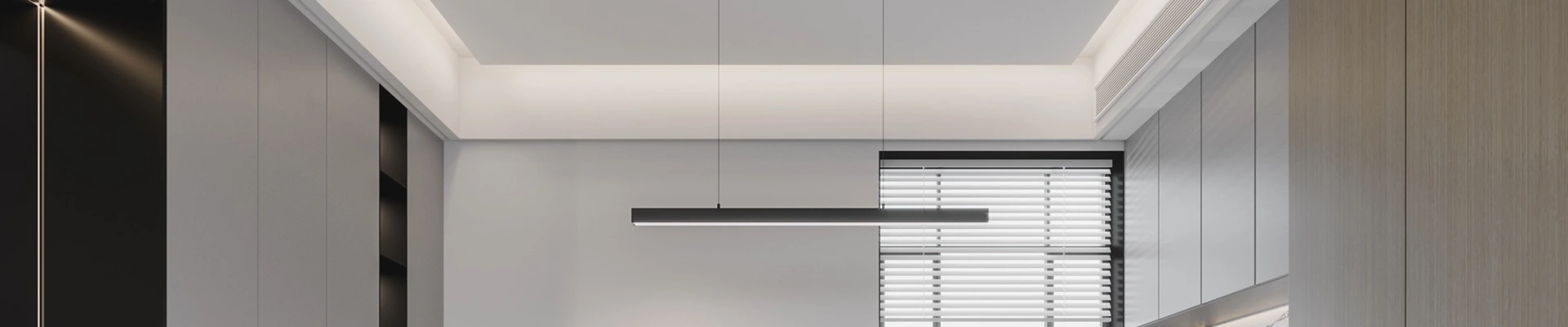
How Large Lens Downlight Is Redefining Comfort and Efficiency in Modern Lighting Design
JHOW Lighting is part of a wider lighting industry shift in which the Large Lens Downlight is being reconsidered for comfort, optical control, and energy performance rather than brightness alone.
For many years, downlights were judged mainly by lumen output, wattage, color temperature, and installation size. Those specifications still matter, but the discussion around architectural lighting is becoming broader. Designers and project teams are paying closer attention to how light reaches people, how evenly it is distributed, how much glare it creates, and how efficiently a space can be illuminated.
The change is closely connected with the continued development of LED technology. According to the International Energy Agency, LEDs sold today average close to 100 lm/W, while some high-performance products exceed 200 lm/W. At the same time, the next stage of LED development is increasingly connected with smarter controls and higher overall system performance.
This means that a modern downlight is no longer simply a small ceiling fixture. Its lens, reflector, aperture, LED source, thermal structure, driver, and control system all influence the final lighting experience.
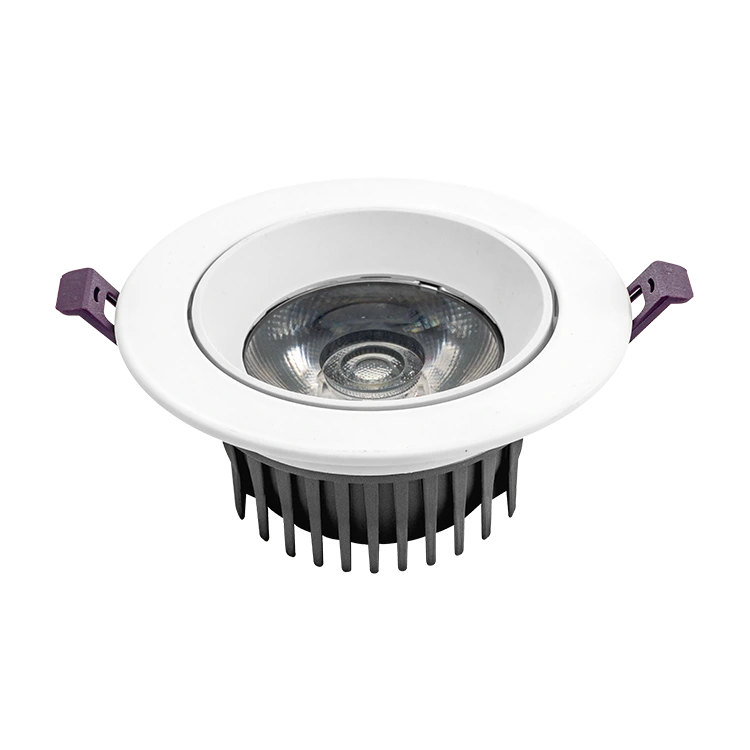
Why the Lens Size Matters
The lens is one of the most visible parts of a downlight, but its importance goes beyond appearance.
A larger optical surface can provide more room for controlling the way light leaves the fixture. Instead of concentrating all output into a narrow and intense beam, optical components can be designed to spread light more progressively across a target area.
This becomes particularly useful in spaces where people spend considerable time looking upward or across a brightly illuminated ceiling.
The objective is not necessarily to produce the maximum possible brightness. It is to create useful illumination without creating excessive contrast between bright and dark areas.
A Large Lens Downlight can therefore be considered as part of a broader movement toward controlled illumination. The key question is changing from “How much light does the fixture produce?” to “Where does that light go, and how does it look from different viewing angles?”
Visual Comfort Is Becoming a Design Priority
Glare has become one of the more important subjects in architectural lighting. The U.S. Department of Energy identifies glare, flicker, color and spectrum, and luminance perception as important areas in lighting-quality research. Better measurement of these factors can improve both visual outcomes and lighting efficiency.
Recent industry activity also reflects this direction.
A 2026 review of lighting trends from the Illuminating Engineering Society's Progress Committee identified configurability, advanced optics, source placement, shielding, and visual comfort among notable developments. The trend is not simply toward larger or smaller fixtures, but toward better control of light from increasingly compact luminaires.
Another 2026 industry report highlighted the growing interest in “dark light” and “dark optics,” where recessed sources, baffles, louvers, and optical geometry are used to reduce the visual presence of the light source and improve glare control.
For everyday users, the result can be quite simple: the room feels easier to look at.
That is especially relevant in offices, hotels, retail interiors, galleries, educational spaces, healthcare environments, and other areas where lighting remains active for long periods.
Efficiency Is More Than Lumens per Watt
Energy efficiency remains an important part of lighting selection, but comparing fixtures only by lm/W can give an incomplete picture.
Suppose two fixtures produce similar total lumen output. If one sends excessive light toward areas that do not need it, part of that energy may provide little practical benefit. A fixture with better optical distribution can sometimes produce a more useful lighting result without simply increasing output.
ENERGY STAR's current downlight criteria illustrate this broader approach. Its requirements include efficiency, light output, zonal lumen density, color quality, dimming behavior, power factor, thermal performance, and light-source lifetime. For example, qualifying downlights must meet a minimum efficacy of 82 lm/W, while the criteria also address how light is distributed within the intended zone.
This reflects an important industry principle: efficient lighting is not just about producing more lumens with less electricity. It is also about delivering those lumens where they are useful.
A Simple Comparison
| Lighting Consideration | Traditional Focus | Current Direction |
|---|---|---|
| Light output | Total lumens | Useful illumination in the target area |
| Optical design | Beam angle | Distribution, shielding, and visual comfort |
| Energy use | Watts per fixture | System-level energy performance |
| Control | On/off switching | Dimming, zoning, and connected control |
| Appearance | Fixture size | Integration with ceiling and architecture |
| Performance | Basic specifications | Multiple measurable lighting factors |
This change makes optical design increasingly important when selecting a downlight for a real project.
From Fixed Output to Adjustable Lighting
Another major development is the growing role of lighting controls.
Modern commercial lighting systems are moving beyond simple on/off operation. The Illuminating Engineering Society reported in September 2026 that continuous dimming, zoning, and more advanced control sequences are becoming increasingly common, with control functions moving closer to the luminaire itself.
For a downlight, this can mean several practical possibilities.
A conference room may require higher illumination during a presentation and softer light during informal discussions. A hotel corridor may need different lighting levels at different times. A retail environment may adjust lighting according to merchandise displays or daylight conditions.
In these situations, a fixture does not need to operate at maximum output throughout the day.
A dimmable Large Lens Downlight can become part of a wider lighting strategy in which output is matched to actual use. This can reduce unnecessary energy consumption while also improving the visual character of the space.
Why Large-Area Optical Design Fits Modern Interiors
Contemporary interiors often favor clean ceilings and fewer visually dominant elements. This creates an interesting challenge for lighting.
The fixture needs to provide sufficient illumination while avoiding the appearance of a ceiling filled with bright points.
A well-designed large optical surface can help distribute light more smoothly and reduce the impression of an extremely concentrated source. The effect becomes particularly noticeable when several downlights are installed in a regular ceiling pattern.
Spacing also matters.
If fixtures are installed too far apart, increasing individual output may create bright pools beneath each fitting and darker areas between them. If fixtures are too close together, energy consumption and installation costs may increase without delivering proportional benefits.
For this reason, lighting layout, mounting height, beam distribution, surface reflectance, and intended activity should be considered together.
The Relationship Between Lighting and Smart Buildings
The development of smart buildings is adding another layer to downlight design.
Connected lighting systems can use occupancy information, daylight levels, schedules, and user settings to determine when and how much light is required. The DesignLights Consortium's updated Networked Lighting Controls requirements, which took effect in August 2026, place greater emphasis on quality lighting controls and integration with building systems.
This development changes the role of the individual luminaire.
Instead of operating as an isolated electrical device, a downlight can become one element in a larger lighting network. That does not mean every project needs complex automation. In many cases, simple dimming or zoning may provide most of the practical benefit.
The important point is flexibility.
A lighting system installed today may need to serve different requirements several years later. Adjustable output and compatible controls can make it easier to adapt without redesigning the entire ceiling.
What Should Be Considered When Evaluating a Large Lens Downlight?
Product selection is becoming more data-driven, but the most useful data depends on the application.
For general commercial interiors, the following factors deserve attention:
1. Optical Distribution
Check whether the beam pattern matches the room dimensions and mounting height. A wide beam is not automatically better; it needs to provide suitable uniformity for the intended layout.
2. Glare Performance
Look beyond decorative lens appearance. Source shielding, optical depth, diffuser characteristics, reflector geometry, and measurable glare performance can all affect visual comfort.
3. Dimming Compatibility
If the lighting design includes dimming, the fixture and driver should support the required control method without noticeable flicker, noise, or unstable low-level operation.
4. Thermal Management
LED efficiency can decline when operating temperatures rise. Proper thermal design helps maintain light output and color stability over time.
5. Color Quality
CCT alone does not describe the complete visual result. CRI and other color-quality characteristics can be relevant in retail, hospitality, healthcare, and display environments.
6. Maintenance and Replacement
A lighting system should also be considered from a lifecycle perspective. Driver accessibility, expected lifetime, replacement procedures, and compatibility with existing infrastructure can influence the practical cost of ownership.
The Industry Is Moving Toward Balanced Performance
The evolution of downlights does not mean that larger lenses will replace every other optical design. Different spaces require different beam angles, apertures, output levels, and glare-control methods.
Instead, the broader trend is toward better-balanced lighting.
The 2026 IES trend review points to a lighting market increasingly focused on configurability, advanced optics, compact form factors, and more deliberate control of light. Meanwhile, the IEA's analysis shows that LED efficiency has already transformed lighting energy use, while the next phase is expected to combine improved efficiency with smarter systems.
For project planning, this means that brightness should not be evaluated separately from comfort, distribution, controls, energy consumption, and maintenance.
The Large Lens Downlight fits into this transition because its value is closely tied to optical performance rather than simply fixture size. As lighting technology continues to develop, the most useful progress may come from making each unit more precise, adaptable, and efficient.
Conclusion
The development of Large Lens Downlight technology reflects a broader change in architectural lighting: modern spaces need light that is not only efficient, but also comfortable, controllable, and appropriately distributed. Advances in LED efficiency, optical design, glare management, dimming, and connected controls are gradually changing how downlights are evaluated.
For everyday projects, the practical lesson is straightforward. A successful lighting design should consider where light goes, how it is perceived, how much energy it consumes, and how easily it can adapt to changing conditions. JHOW Lighting's continued focus on LED lighting categories places Large Lens Downlight within this wider industry movement from basic illumination toward more controlled and user-oriented lighting environments.